
Economy
IMF Program Pakistan: Economic Reform and Market Impact

Published
2 days agoon
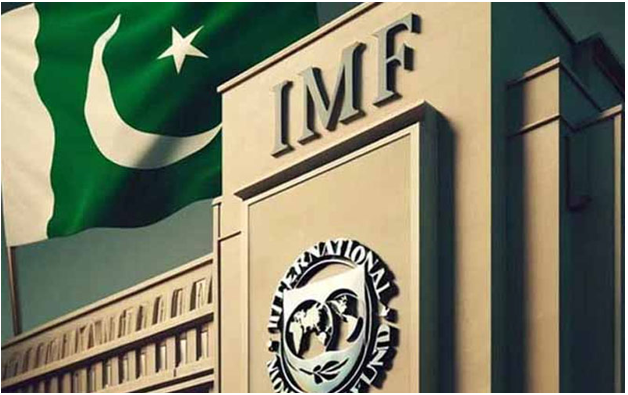
IMF Program Pakistan Latest Developments
The IMF program Pakistan remains central to the country’s economic stabilization strategy. The International Monetary Fund’s review process focuses on fiscal discipline, structural reforms, and external account stability. Investors closely monitor each review outcome because IMF approvals unlock foreign funding and strengthen foreign exchange reserves. Recent discussions highlight progress in tax reforms, energy sector adjustments, and subsidy rationalization. A successful IMF review improves global confidence and supports currency stability. However, reform implementation remains critical to sustaining long-term macroeconomic health. Markets often react positively to confirmation of continued IMF support, particularly in equities and bond markets.
Why IMF Reviews Matter for Markets
IMF program progress directly influences financial markets and investor confidence. Key impacts include:
- Strengthening foreign exchange reserves
- Improving sovereign credit outlook
- Stabilizing the rupee
- Encouraging foreign portfolio inflows
- Enhancing fiscal transparency
When IMF disbursements are confirmed, market volatility usually declines. A stable macroeconomic framework reduces uncertainty for businesses and international investors. However, delays or unmet conditions can increase market pressure. Therefore, policy continuity and reform credibility are essential for sustainable economic recovery.
Structural Reforms and Economic Discipline
The IMF emphasizes tax base expansion, energy sector efficiency, and public finance management reforms. These measures aim to reduce fiscal deficits and improve long-term economic resilience. Inflation control and revenue mobilization remain top priorities.
While reform measures can create short-term economic adjustments, they are designed to stabilize the economy over time. Investors typically respond favorably to disciplined fiscal policy. Strong governance signals improve Pakistan’s global financial standing and reduce borrowing costs in international markets.
Google Helpful Content Update & Economic Reporting Standards
Under Google’s Helpful Content and E-E-A-T framework, economic reporting must demonstrate expertise, reliability, and factual accuracy. To rank effectively for “IMF program Pakistan,” content should:
- Reference official policy statements
- Explain economic implications clearly
- Avoid speculative or exaggerated claims
- Provide balanced analysis
Financial content that connects IMF developments to currency stability, stock markets, and fiscal policy improves authority. Structured formatting enhances featured snippet potential and organic visibility.
Economic Outlook After IMF Review
Looking ahead, continued IMF engagement can provide macroeconomic stability and investor reassurance. If reform implementation remains consistent, Pakistan may attract higher foreign investment and strengthen its currency position. However, global economic conditions and commodity prices remain risk variables.
Businesses should prepare for gradual stabilization supported by disciplined fiscal management. Investors should monitor upcoming review schedules and reform milestones.
Stay connected to our ECONOMY section for real-time policy updates and expert financial insights.
Conclusion
The IMF program Pakistan plays a vital role in stabilizing the economy and restoring investor confidence. Sustainable reforms and fiscal discipline will determine long-term success.
You may like

Trade
Pakistan and Germany explore new business cooperation during Karachi meeting
Published
2 hours agoon
March 6, 2026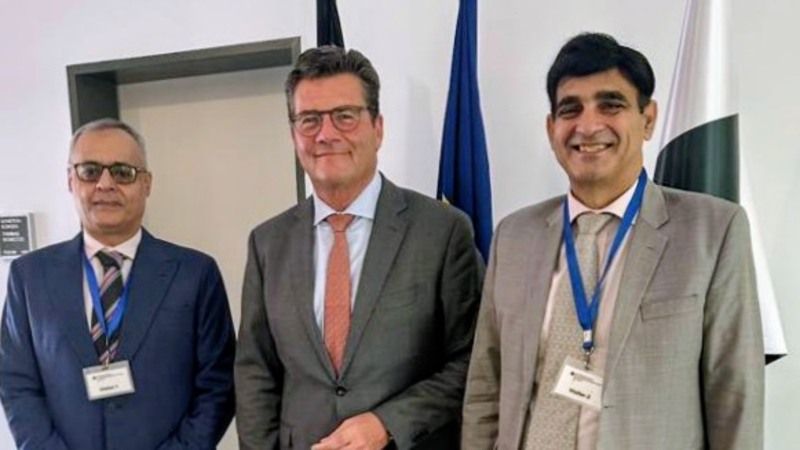
Pakistan and Germany are looking to strengthen economic engagement as senior representatives discussed opportunities for expanding business cooperation between the two countries. The discussion took place during a meeting in Karachi between former federal minister Muhammad Noman Saigal and the Consul General of Germany, Thomas, where both sides explored prospects for increasing bilateral trade and encouraging new investment initiatives. Business leader Jan Dadabhoy, a prominent entrepreneur and former president of Karachi Gymkhana Club, was also present during the meeting. The dialogue reflected growing interest in deepening economic ties and identifying sectors where companies from both countries can collaborate to support industrial growth and commercial partnerships.
During the meeting, participants highlighted the long standing diplomatic and economic relationship between Pakistan and Germany. Saigal acknowledged the support that Germany has extended to Pakistan over the years and emphasized that the relationship between the two nations has remained strong through various economic and development initiatives. He also recognized the role of German diplomatic missions in maintaining engagement with Pakistani citizens and businesses. According to participants, the conversation focused on how both countries could expand commercial interaction in areas such as trade, manufacturing cooperation and technology exchange to strengthen economic relations.
Jan Dadabhoy emphasized the importance of encouraging new business ventures between Pakistan and Germany to unlock greater economic potential. He noted that stronger interaction between private sector representatives in both countries could lead to joint ventures, investment partnerships and greater participation in international trade events. Dadabhoy also stressed that consistent dialogue between business leaders and policymakers plays a vital role in building confidence among investors. Expanding commercial partnerships, he said, could create new opportunities for industries in Pakistan while enabling German companies to explore emerging markets and industrial partnerships within the region.
The German Consul General highlighted the long history of German companies operating in Pakistan and noted that economic relations between the two countries date back more than a century. Several German firms have maintained a presence in Pakistan for decades, particularly in engineering, industrial manufacturing and infrastructure related services. Among the examples discussed during the meeting was Siemens, which has operated in Pakistan for over one hundred years and has contributed to major industrial and technology projects in the country. Such longstanding partnerships demonstrate the durability of commercial ties between the two nations.
Participants in the meeting also discussed international trade exhibitions and business forums that could help strengthen cooperation. Germany regularly hosts major trade exhibitions where companies from across the world participate to showcase industrial products, technology solutions and manufacturing innovations. These events create opportunities for Pakistani companies to engage with European markets and explore export potential. Strengthening participation in international exhibitions can help local businesses establish global connections, gain exposure to advanced technologies and attract foreign investment in sectors such as textiles, manufacturing and engineering.
Pakistan’s textile sector was also highlighted as an important area for expanding trade cooperation. Germany is one of Europe’s largest markets for textile products and has long been an important trading partner for Pakistan’s export industry. Industry participants believe that improved engagement between business communities in both countries could help increase exports, particularly in value added textile products and technical fabrics. Increased collaboration could also support knowledge exchange in areas such as manufacturing efficiency, quality standards and sustainable production practices which are increasingly important in global trade.
The meeting concluded with both sides expressing interest in strengthening dialogue and exploring additional avenues for economic cooperation in the future. Participants emphasized the need for continued engagement between business leaders, diplomatic representatives and policymakers in order to identify new investment prospects and commercial partnerships. As Pakistan continues to promote trade and foreign investment, discussions with international partners such as Germany are viewed as an important step toward expanding economic connectivity and encouraging sustainable business growth.
Corporate News
SECP approves LSE Capital voluntary de registration from modaraba business
Published
2 hours agoon
March 6, 2026
Pakistan’s securities regulator has approved the voluntary de registration of LSE Capital Limited as a modaraba management company, marking the company’s formal exit from the modaraba sector. The Securities and Exchange Commission of Pakistan confirmed the decision after reviewing the company’s request and determining that LSE Capital no longer manages any modaraba entity. The development reflects a regulatory update within Pakistan’s capital markets framework and signals a structural change in the company’s business operations. Market disclosures indicate that the decision has already been communicated to the Pakistan Stock Exchange to ensure that relevant stakeholders and market participants remain informed about the regulatory action.
According to official correspondence issued by the Securities and Exchange Commission of Pakistan, LSE Capital has been removed from the register of modaraba companies maintained by the regulator. The approval followed the company’s formal request seeking voluntary de registration of its modaraba management licence. The regulator confirmed that the company no longer manages any active modaraba and has indicated that it does not plan to launch a new modaraba in the future. This regulatory update effectively ends the company’s authorization to operate as a modaraba management company under Pakistan’s financial regulatory framework.
The development is closely linked to the earlier merger of Modaraba Al Mali into LSE Capital. Following the completion of the merger process, the company informed the regulator that it was no longer involved in managing modaraba operations. As a result, the continuation of its modaraba management company licence was no longer required. Regulatory authorities assessed the situation and approved the request for voluntary de registration, concluding that the company’s role within the modaraba structure had effectively ceased after the merger.
In its directive to the company, the regulator instructed LSE Capital to immediately stop undertaking any activities associated with a modaraba management company. The company has also been asked to revise its memorandum and articles of association to reflect the change in its regulatory status. In addition, authorities directed the company to remove the words Modaraba Management from its corporate name within thirty days of the notification. The requirement aims to ensure that the company’s name accurately reflects its current business structure and avoids any confusion regarding regulatory authorization.
The Securities and Exchange Commission of Pakistan also clarified that the voluntary de registration does not eliminate the applicability of other provisions under the Modaraba Companies and Modaraba Floatation and Control Ordinance of 1980. Regulatory oversight provisions related to enforcement actions, penalties or legal proceedings remain applicable if any past violations or regulatory issues are identified. This clarification ensures that de registration does not limit the regulator’s authority to investigate or take action in case of non compliance with financial regulations governing modaraba operations.
LSE Capital disclosed the development through an official filing submitted to the Pakistan Stock Exchange. In the notification, the company confirmed that its modaraba management company licence has been cancelled following the approval of its voluntary de registration request by the regulator. The company requested the exchange to circulate the information among Trading Right Entitlement Certificate holders to ensure transparency and proper market disclosure. Such announcements form part of regulatory requirements designed to maintain transparency within Pakistan’s capital markets.
The modaraba sector operates under a specific Islamic financial structure in Pakistan where management companies establish and administer modarabas that conduct business activities based on profit sharing principles. Regulatory approval is required for companies to float and manage such entities. The exit of LSE Capital from this sector reflects a shift in the company’s operational focus and demonstrates how corporate restructuring, mergers, and evolving business strategies can influence participation in specialized financial segments within Pakistan’s regulated capital market environment.
Corporate News
Chinese investment group explores $5 billion to $10 billion projects in Pakistan
Published
2 hours agoon
March 6, 2026
Pakistan is attracting renewed foreign investment interest as a major Chinese industrial group explores the possibility of investing between $5 billion and $10 billion across several sectors in the country. The proposal emerged during discussions between officials of Pakistan’s Board of Investment and representatives of Aerospace Development Industry Investment Group Co., a Chinese company involved in large scale industrial and technology investments. The potential investment signals growing economic cooperation between Pakistan and China and highlights the continued importance of bilateral partnerships in supporting infrastructure, industrial expansion, and technological development across the region.
During the meeting held in Islamabad, Federal Minister for Board of Investment Qaiser Ahmed Sheikh welcomed a delegation led by Lu Jinhai, Party Secretary and Chairman of the Chinese investment group. The minister emphasized that Pakistan offers substantial opportunities for international investors due to its strategic geographic location and expanding domestic market. He noted that Pakistan serves as a bridge connecting South Asia, Central Asia, and the Middle East, giving investors access to regional trade routes and emerging markets. With a population exceeding 240 million people and a large young workforce, the country is positioned as a growing hub for industrial and technology driven investments.
The visiting delegation presented an overview of their company’s global operations and long term investment strategy. Aerospace Development Industry Investment Group Co. operates as an international investment firm with a strong financial profile and an AAA corporate credit rating. The company focuses on strategic industrial projects including aerospace development, artificial intelligence, electric vehicles, drone technology, and large scale energy investments. Officials explained that Pakistan’s expanding economic sectors present opportunities for collaboration in advanced technology industries, mineral exploration, and broader industrial development initiatives.
Mining and minerals were highlighted as one of the sectors with strong potential for investment cooperation. Pakistan possesses significant reserves of copper, gold, rare earth elements, and other strategic minerals that are increasingly important for modern industries and technology supply chains. Chinese companies have already played a role in several large mining projects in Pakistan and the proposed investment indicates that interest in the sector remains strong. Expanding exploration and processing activities could contribute to industrial growth while creating employment opportunities and strengthening export capacity.
The Chinese delegation also expressed interest in contributing to technology development and workforce training initiatives in Pakistan. Representatives of the company indicated that skill development programs could be an important component of future collaboration, particularly in sectors linked to advanced manufacturing and technology driven industries. Such initiatives could support knowledge transfer, improve technical training for local workers, and strengthen Pakistan’s capacity to participate in global technology supply chains. The approach reflects a broader trend in foreign investment where technology partnerships increasingly accompany industrial projects.
Pakistan’s government has been actively working to improve the business environment in order to attract larger inflows of foreign direct investment. Officials at the Board of Investment highlighted ongoing regulatory reforms aimed at simplifying procedures, improving ease of doing business, and strengthening investor protections. Authorities believe that these reforms, combined with targeted incentives for industrial projects, can help position Pakistan as a competitive destination for international investors seeking growth opportunities in South Asia and surrounding regions.
Existing economic cooperation frameworks between Pakistan and China also play a significant role in facilitating investment discussions. The two countries maintain a long standing trade relationship supported by a bilateral Free Trade Agreement and multiple industrial initiatives linked to regional connectivity projects. Officials highlighted that recent business to business engagements between companies from both countries have resulted in numerous memoranda of understanding aimed at expanding trade and investment ties. These agreements demonstrate a growing interest from both sides in developing joint ventures and new industrial partnerships.
Special Economic Zones established under Pakistan’s industrial development strategy were also presented as attractive investment destinations. These zones provide incentives such as tax exemptions and duty free import of industrial machinery to encourage foreign companies to establish manufacturing operations. Government representatives informed the Chinese delegation that these facilities are designed to support export oriented industries while promoting technology transfer and industrial modernization within the country.

Pakistan and Germany explore new business cooperation during Karachi meeting

SECP approves LSE Capital voluntary de registration from modaraba business

Chinese investment group explores $5 billion to $10 billion projects in Pakistan
Trending

 Fashion9 years ago
These ’90s fashion trends are making a comeback in 2017
- Entertainment9 years ago
The final 6 ‘Game of Thrones’ episodes might feel like a full season
- Fashion9 years ago
According to Dior Couture, this taboo fashion accessory is back
- Entertainment9 years ago
The old and New Edition cast comes together to perform
- Sports9 years ago
Phillies’ Aaron Altherr makes mind-boggling barehanded play
- Business9 years ago
Uber and Lyft are finally available in all of New York State
- Entertainment9 years ago
Disney’s live-action Aladdin finally finds its stars
- Sports9 years ago
Steph Curry finally got the contract he deserves from the Warriors