


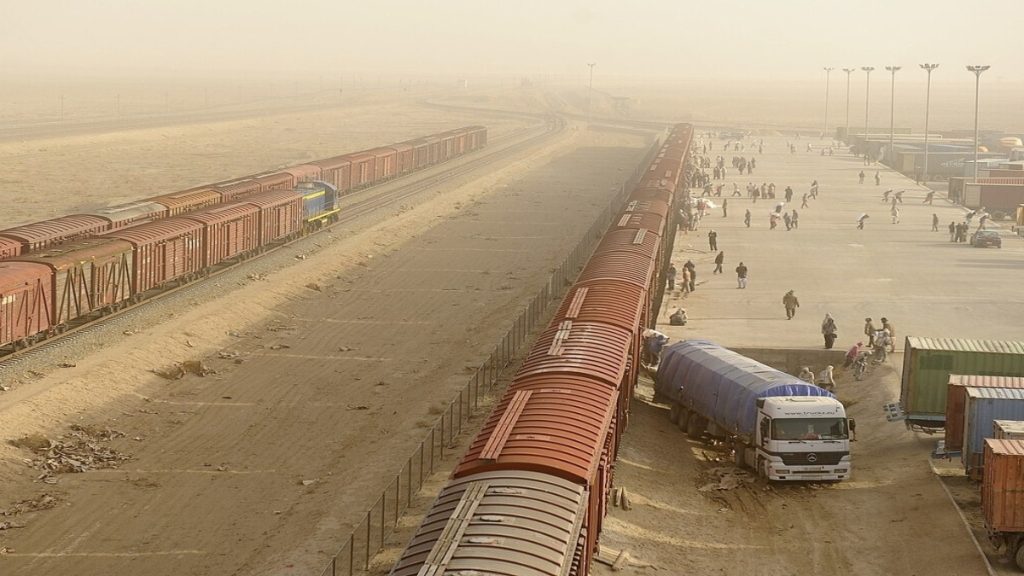
Rising military tensions between Pakistan and Afghanistan have begun disrupting regional trade expectations, creating uncertainty for Central Asian countries that were counting on the two neighbors to provide faster access to global sea routes. The conflict, which has intensified along the long frontier between the two countries, is already raising concerns among regional policymakers and trade experts who fear that ongoing fighting could delay major connectivity projects linking Central Asia with Pakistani ports. For landlocked economies such as Kazakhstan, Uzbekistan and Kyrgyzstan, access to seaports through Afghanistan and Pakistan has long been viewed as a critical pathway for expanding exports and integrating more deeply with global markets. Analysts warn that escalating hostilities could undermine months of diplomatic progress aimed at building new trade corridors connecting Central Asia with South Asia and international shipping routes.
Reports indicate that clashes between the two sides have included air operations and ground confrontations along the approximately 1600 mile border that separates Pakistan and Afghanistan. The situation has raised fears that transport routes passing through Afghanistan could become unstable or temporarily inaccessible. Trade planners in Central Asia had been exploring Afghanistan and Pakistan as the most direct route to the Arabian Sea which would allow their exporters to ship goods more efficiently to international markets. For countries that currently rely on long overland routes through other regions, the proposed corridor promised to significantly reduce transportation costs and shorten delivery times for exports ranging from agricultural commodities to industrial products. The emerging conflict is now casting doubt over the pace at which these projects can move forward.
In recent months Central Asian governments had intensified diplomatic engagement with both Islamabad and Kabul in an effort to strengthen economic connectivity. High level visits from leaders of Kazakhstan, Kyrgyzstan and Uzbekistan to Pakistan helped lay the groundwork for new trade partnerships and infrastructure plans. Among the most ambitious proposals discussed was a trans Afghan railway network that would connect Central Asian markets with Pakistan’s major ports including Karachi, Port Qasim and Gwadar. These projects were designed to transform regional trade by giving landlocked economies a reliable maritime outlet. Officials also discussed the development of logistics hubs and terminals at Pakistani ports that would facilitate the movement of Central Asian exports to global markets.
Economic cooperation with Afghanistan had also been expanding in parallel with these plans. Central Asian countries had been seeking to increase commercial engagement with Kabul as part of a broader strategy to improve regional stability and connectivity. Uzbekistan in particular had taken steps to deepen economic ties including reopening cross border transit points and expanding bilateral trade flows. Officials in Tashkent had expressed ambitions to significantly increase trade with Afghanistan in the coming years as infrastructure links improved. However the new conflict between Pakistan and Afghanistan threatens to slow or suspend many of these initiatives as governments reassess security conditions and the viability of long term transport corridors passing through the region.
Regional analysts believe that prolonged instability could delay Central Asia’s broader goal of overcoming the limitations of being landlocked economies. Without reliable access to seaports exporters in the region face higher transportation costs and limited trade flexibility. The longer the conflict continues the more difficult it may become for countries in the region to implement connectivity agreements and infrastructure projects that were designed to expand trade routes and stimulate economic growth across Central and South Asia.