
Corporate News
Iran Conflict Creates Mixed Impact for Malaysian Corporations and Energy Sector

Published
2 days agoon
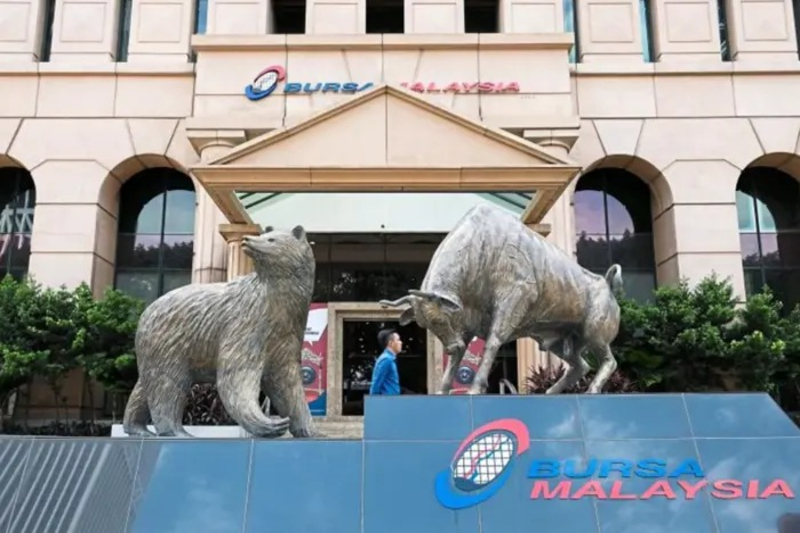
The escalating conflict in the Middle East is creating uneven consequences for Malaysian companies, with some businesses facing operational risks while others could benefit from rising energy prices and shifting trade routes. Analysts say companies with direct exposure to Middle Eastern markets may experience disruptions in operations and logistics, while firms connected to energy production or alternative trade channels could see stronger financial performance. The evolving geopolitical situation has increased uncertainty in global markets, prompting investors to closely monitor corporate exposure to the region. Market analysts note that the duration of the conflict will play a critical role in determining how deeply Malaysian companies are affected, particularly those involved in aviation, energy services and international logistics.
Several Malaysian listed companies maintain business operations or commercial partnerships across the Middle East, which has raised concerns about potential disruptions. Companies with manufacturing facilities, energy investments or service contracts in Gulf countries may face operational challenges if regional instability affects transportation networks or project execution. Some businesses generate a portion of their revenue from markets in the Middle East and North Africa, making them sensitive to economic conditions in those regions. Aviation companies have already experienced operational impacts with certain flight routes suspended due to security concerns and changing travel conditions. Analysts say these developments illustrate how geopolitical tensions can quickly influence companies with international operations.
While some sectors face challenges others could benefit from changing global trade dynamics. Shipping and port operators in Southeast Asia may experience increased traffic if supply routes through major Gulf ports become constrained. Trade flows could be redirected toward alternative logistics hubs which may temporarily boost cargo volumes for certain ports in the region. Financial analysts suggest that rerouting of shipments from Gulf ports could lead to congestion at other maritime hubs across South and Southeast Asia. As a result companies involved in port management and shipping logistics may see increased demand for their services during periods of disruption in traditional trade corridors.
The energy sector in Malaysia could also experience a shift in market conditions due to rising oil prices triggered by geopolitical tensions. Higher global crude prices generally strengthen the financial performance of upstream oil and gas producers as well as companies involved in exploration and production services. Analysts say stronger energy prices could improve revenue for energy companies that previously experienced weaker earnings due to lower global prices. National energy revenues could also receive a boost if elevated oil prices continue for an extended period. Government income linked to petroleum production often fluctuates with global energy prices which means prolonged price increases could influence fiscal revenues.
Despite potential benefits for certain sectors rising energy costs may also create challenges for industries that rely heavily on fuel and raw materials. Manufacturing sectors such as chemicals, metals and fertilizers could face higher production costs if oil prices remain elevated. Shipping disruptions may also affect supply chains by delaying shipments and increasing working capital requirements for businesses waiting for goods to arrive. Analysts say the overall economic impact will depend on how long the conflict continues and whether global energy markets stabilize in the coming months as investors closely track geopolitical developments.
You may like
Corporate News
SECP approves LSE Capital voluntary de registration from modaraba business
Published
2 hours agoon
March 6, 2026
Pakistan’s securities regulator has approved the voluntary de registration of LSE Capital Limited as a modaraba management company, marking the company’s formal exit from the modaraba sector. The Securities and Exchange Commission of Pakistan confirmed the decision after reviewing the company’s request and determining that LSE Capital no longer manages any modaraba entity. The development reflects a regulatory update within Pakistan’s capital markets framework and signals a structural change in the company’s business operations. Market disclosures indicate that the decision has already been communicated to the Pakistan Stock Exchange to ensure that relevant stakeholders and market participants remain informed about the regulatory action.
According to official correspondence issued by the Securities and Exchange Commission of Pakistan, LSE Capital has been removed from the register of modaraba companies maintained by the regulator. The approval followed the company’s formal request seeking voluntary de registration of its modaraba management licence. The regulator confirmed that the company no longer manages any active modaraba and has indicated that it does not plan to launch a new modaraba in the future. This regulatory update effectively ends the company’s authorization to operate as a modaraba management company under Pakistan’s financial regulatory framework.
The development is closely linked to the earlier merger of Modaraba Al Mali into LSE Capital. Following the completion of the merger process, the company informed the regulator that it was no longer involved in managing modaraba operations. As a result, the continuation of its modaraba management company licence was no longer required. Regulatory authorities assessed the situation and approved the request for voluntary de registration, concluding that the company’s role within the modaraba structure had effectively ceased after the merger.
In its directive to the company, the regulator instructed LSE Capital to immediately stop undertaking any activities associated with a modaraba management company. The company has also been asked to revise its memorandum and articles of association to reflect the change in its regulatory status. In addition, authorities directed the company to remove the words Modaraba Management from its corporate name within thirty days of the notification. The requirement aims to ensure that the company’s name accurately reflects its current business structure and avoids any confusion regarding regulatory authorization.
The Securities and Exchange Commission of Pakistan also clarified that the voluntary de registration does not eliminate the applicability of other provisions under the Modaraba Companies and Modaraba Floatation and Control Ordinance of 1980. Regulatory oversight provisions related to enforcement actions, penalties or legal proceedings remain applicable if any past violations or regulatory issues are identified. This clarification ensures that de registration does not limit the regulator’s authority to investigate or take action in case of non compliance with financial regulations governing modaraba operations.
LSE Capital disclosed the development through an official filing submitted to the Pakistan Stock Exchange. In the notification, the company confirmed that its modaraba management company licence has been cancelled following the approval of its voluntary de registration request by the regulator. The company requested the exchange to circulate the information among Trading Right Entitlement Certificate holders to ensure transparency and proper market disclosure. Such announcements form part of regulatory requirements designed to maintain transparency within Pakistan’s capital markets.
The modaraba sector operates under a specific Islamic financial structure in Pakistan where management companies establish and administer modarabas that conduct business activities based on profit sharing principles. Regulatory approval is required for companies to float and manage such entities. The exit of LSE Capital from this sector reflects a shift in the company’s operational focus and demonstrates how corporate restructuring, mergers, and evolving business strategies can influence participation in specialized financial segments within Pakistan’s regulated capital market environment.
Corporate News
Chinese investment group explores $5 billion to $10 billion projects in Pakistan
Published
2 hours agoon
March 6, 2026
Pakistan is attracting renewed foreign investment interest as a major Chinese industrial group explores the possibility of investing between $5 billion and $10 billion across several sectors in the country. The proposal emerged during discussions between officials of Pakistan’s Board of Investment and representatives of Aerospace Development Industry Investment Group Co., a Chinese company involved in large scale industrial and technology investments. The potential investment signals growing economic cooperation between Pakistan and China and highlights the continued importance of bilateral partnerships in supporting infrastructure, industrial expansion, and technological development across the region.
During the meeting held in Islamabad, Federal Minister for Board of Investment Qaiser Ahmed Sheikh welcomed a delegation led by Lu Jinhai, Party Secretary and Chairman of the Chinese investment group. The minister emphasized that Pakistan offers substantial opportunities for international investors due to its strategic geographic location and expanding domestic market. He noted that Pakistan serves as a bridge connecting South Asia, Central Asia, and the Middle East, giving investors access to regional trade routes and emerging markets. With a population exceeding 240 million people and a large young workforce, the country is positioned as a growing hub for industrial and technology driven investments.
The visiting delegation presented an overview of their company’s global operations and long term investment strategy. Aerospace Development Industry Investment Group Co. operates as an international investment firm with a strong financial profile and an AAA corporate credit rating. The company focuses on strategic industrial projects including aerospace development, artificial intelligence, electric vehicles, drone technology, and large scale energy investments. Officials explained that Pakistan’s expanding economic sectors present opportunities for collaboration in advanced technology industries, mineral exploration, and broader industrial development initiatives.
Mining and minerals were highlighted as one of the sectors with strong potential for investment cooperation. Pakistan possesses significant reserves of copper, gold, rare earth elements, and other strategic minerals that are increasingly important for modern industries and technology supply chains. Chinese companies have already played a role in several large mining projects in Pakistan and the proposed investment indicates that interest in the sector remains strong. Expanding exploration and processing activities could contribute to industrial growth while creating employment opportunities and strengthening export capacity.
The Chinese delegation also expressed interest in contributing to technology development and workforce training initiatives in Pakistan. Representatives of the company indicated that skill development programs could be an important component of future collaboration, particularly in sectors linked to advanced manufacturing and technology driven industries. Such initiatives could support knowledge transfer, improve technical training for local workers, and strengthen Pakistan’s capacity to participate in global technology supply chains. The approach reflects a broader trend in foreign investment where technology partnerships increasingly accompany industrial projects.
Pakistan’s government has been actively working to improve the business environment in order to attract larger inflows of foreign direct investment. Officials at the Board of Investment highlighted ongoing regulatory reforms aimed at simplifying procedures, improving ease of doing business, and strengthening investor protections. Authorities believe that these reforms, combined with targeted incentives for industrial projects, can help position Pakistan as a competitive destination for international investors seeking growth opportunities in South Asia and surrounding regions.
Existing economic cooperation frameworks between Pakistan and China also play a significant role in facilitating investment discussions. The two countries maintain a long standing trade relationship supported by a bilateral Free Trade Agreement and multiple industrial initiatives linked to regional connectivity projects. Officials highlighted that recent business to business engagements between companies from both countries have resulted in numerous memoranda of understanding aimed at expanding trade and investment ties. These agreements demonstrate a growing interest from both sides in developing joint ventures and new industrial partnerships.
Special Economic Zones established under Pakistan’s industrial development strategy were also presented as attractive investment destinations. These zones provide incentives such as tax exemptions and duty free import of industrial machinery to encourage foreign companies to establish manufacturing operations. Government representatives informed the Chinese delegation that these facilities are designed to support export oriented industries while promoting technology transfer and industrial modernization within the country.
Corporate News
Pakistan company registrations surge as business formation accelerates
Published
2 hours agoon
March 6, 2026
Pakistan recorded a significant rise in company registrations during February, reflecting stronger entrepreneurial activity and improving confidence in the country’s business landscape. Official regulatory data shows that 3,444 new companies were incorporated during the month, pushing the total number of registered companies nationwide to 287,049. The steady increase highlights a widening base of formal businesses across the economy and suggests that both startups and established investors are increasingly opting for structured corporate registration. The trend also signals a gradual shift toward documented economic activity as regulators continue to promote digital incorporation systems, simplified compliance procedures, and business friendly policies aimed at encouraging investment and long term enterprise development.
Foreign participation also gained momentum during the month, indicating continued international interest in Pakistan’s emerging sectors. A total of 82 companies were registered with foreign involvement, either through partnerships or shareholding structures. Among these, Chinese investors played a particularly visible role by obtaining directorship positions in 44 companies. Investors from the United States, the United Kingdom, Germany, Canada and several other countries also participated in newly registered businesses. Their investments were distributed across industries such as mining, trading and information technology. The pattern suggests that international investors continue to view Pakistan as a market with long term potential, especially in sectors linked to technology, infrastructure and resource development.
Regional distribution of new company registrations showed Punjab maintaining its position as the leading province for business formation. A total of 1,696 companies were registered in Punjab during the month, representing nearly half of the nationwide additions. Islamabad followed with 656 new companies, reflecting the capital’s growing importance as a hub for technology firms, consultancy services and digital startups. Sindh recorded 555 new registrations, supported by Karachi’s position as Pakistan’s largest commercial center. Other provinces also contributed to the overall growth, indicating that entrepreneurial activity is spreading beyond traditional business hubs and gradually expanding across multiple regions of the country.
Sector wise data revealed that technology related businesses remained the most active area of company formation. Information technology and e commerce led the rankings with 723 new companies registered during February. The rapid expansion of digital services, software development and online retail platforms has been a major driver of corporate registrations in recent years. The trading sector followed with 531 new companies, while services based businesses added 434 registrations. Real estate related firms accounted for 323 new companies, highlighting continued activity in property development, construction services and housing related ventures.
A range of other industries also saw new companies entering the market, reflecting the broadening structure of Pakistan’s private sector. Registrations were recorded in mining, textiles, education, healthcare, sports goods manufacturing, electrical products and cable manufacturing. The diversity across sectors indicates that company formation is not limited to a single industry but instead spans traditional manufacturing, service oriented businesses and emerging technology driven enterprises. This distribution suggests that Pakistan’s corporate sector is gradually becoming more diversified, with different industries contributing to employment generation, investment inflows and economic productivity.
Regulatory authorities have continued to emphasize digitization and simplified procedures as part of broader efforts to expand the corporate sector. Online registration systems and streamlined approval processes have reduced the time required to incorporate companies, making it easier for entrepreneurs and investors to formalize their operations. The rising number of company registrations also reflects the growing importance of corporate governance structures, access to banking services and participation in formal supply chains. As more businesses move into the documented economy, regulators are able to strengthen transparency and oversight while providing companies with improved access to financing and institutional support.

Pakistan and Germany explore new business cooperation during Karachi meeting

SECP approves LSE Capital voluntary de registration from modaraba business

Chinese investment group explores $5 billion to $10 billion projects in Pakistan
Trending

 Fashion9 years ago
These ’90s fashion trends are making a comeback in 2017
- Entertainment9 years ago
The final 6 ‘Game of Thrones’ episodes might feel like a full season
- Fashion9 years ago
According to Dior Couture, this taboo fashion accessory is back
- Entertainment9 years ago
The old and New Edition cast comes together to perform
- Sports9 years ago
Phillies’ Aaron Altherr makes mind-boggling barehanded play
- Business9 years ago
Uber and Lyft are finally available in all of New York State
- Entertainment9 years ago
Disney’s live-action Aladdin finally finds its stars
- Sports9 years ago
Steph Curry finally got the contract he deserves from the Warriors