


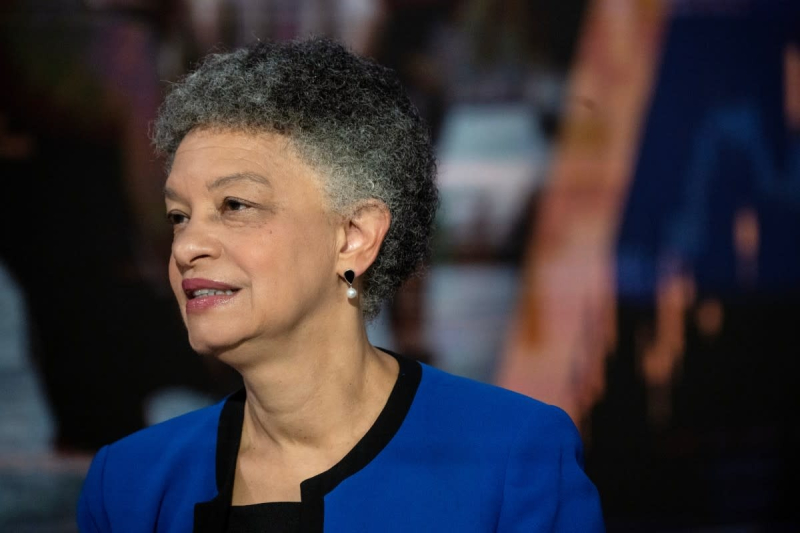
Boston Federal Reserve President Susan Collins said that the current stance of U.S. monetary policy remains appropriate and well positioned as policymakers continue monitoring inflation and broader economic conditions. Speaking at an event in Springfield, Massachusetts, Collins indicated that the Federal Reserve does not need to rush into any immediate changes in interest rates and should remain patient while assessing incoming economic data. Her comments highlight the central bank’s cautious approach as it balances the need to control inflation while supporting economic growth. According to Collins, policymakers are likely to keep the current interest rate target steady for some time until there is clearer evidence that inflation is moving sustainably toward the Federal Reserve’s long-term target.
Fed Signals Patience on Future Interest Rate Decisions
Collins emphasized that the Federal Reserve should take a careful and deliberative approach when considering adjustments to interest rates. She noted that policymakers require stronger evidence that inflation is steadily declining before moving forward with any rate cuts. The central bank has been maintaining a tight monetary policy stance to ensure that inflation pressures continue to ease after the significant price increases experienced in recent years. According to Collins, the current policy framework allows the Federal Reserve to observe economic developments without making premature adjustments. She indicated that maintaining patience is essential as policymakers evaluate how inflation and economic activity evolve over the coming months.
Inflation Still Facing Uncertain Path
While Collins expressed confidence that inflation could gradually decline over time, she acknowledged that the outlook remains uncertain. She pointed out that several factors could still place upward pressure on prices, making it necessary for policymakers to remain cautious. One of the concerns mentioned involves trade policies and potential tariff developments that could affect production costs and consumer prices. These risks highlight the complexity of managing inflation within a dynamic global economic environment. Collins explained that although inflation is expected to ease eventually, policymakers must carefully assess the data to ensure that price pressures continue moving toward the Federal Reserve’s target of 2 percent.
Labor Market Stability Supports Economic Outlook
Another key factor influencing the Federal Reserve’s policy outlook is the condition of the U.S. labor market. Collins noted that the job market appears relatively stable, providing support for overall economic activity. Employment conditions remain an important indicator for policymakers because a strong labor market can sustain consumer spending and economic growth. At the same time, the Federal Reserve continues to monitor wage growth and hiring trends to ensure that labor market strength does not contribute to renewed inflationary pressures. Collins suggested that hiring activity could increase somewhat in the coming months, although the pace of job growth is expected to remain moderate rather than rapid.
Financial Conditions Continue to Support Growth
Collins also highlighted that current financial conditions remain supportive of economic expansion. Despite the Federal Reserve’s tightening cycle in previous years, credit availability and financial market conditions continue to allow businesses and households to access financing for investment and spending. Stable financial conditions can help sustain economic activity even while policymakers maintain a restrictive monetary stance aimed at controlling inflation. Collins indicated that the broader economic environment remains relatively stable, allowing policymakers to carefully monitor developments without making immediate adjustments to the policy rate.
Fed’s Strategy Focused on Price Stability
The Federal Reserve’s monetary policy strategy continues to focus on bringing inflation back to its long-term target while maintaining a stable economic environment. Interest rate adjustments remain one of the central bank’s most important tools for managing inflation and influencing economic conditions. When inflation rises above the target level, policymakers typically tighten monetary policy by raising interest rates to slow demand and stabilize prices. Conversely, when inflation pressures decline and economic conditions weaken, the central bank may consider easing policy to support economic activity. Collins emphasized that policymakers must rely on incoming economic data when determining the appropriate timing for any future policy adjustments.
Global Economic Factors Add Uncertainty
Collins also pointed out that global economic developments can influence the outlook for inflation and growth in the United States. Trade dynamics, supply chain conditions, and geopolitical developments can all affect price stability and economic performance. Such factors contribute to the uncertainty surrounding the inflation outlook, making it important for policymakers to remain flexible in their policy decisions. Monitoring global economic trends helps the Federal Reserve anticipate potential risks that could influence domestic economic conditions.
Outlook for U.S. Monetary Policy
Looking ahead, Collins indicated that the Federal Reserve is likely to maintain its current policy stance while evaluating future economic data. Policymakers will continue assessing inflation trends, labor market conditions, and broader economic indicators before deciding whether interest rate adjustments are necessary. The central bank’s approach suggests that patience and careful monitoring will remain key elements of monetary policy as the economy moves through a period of evolving financial conditions.