


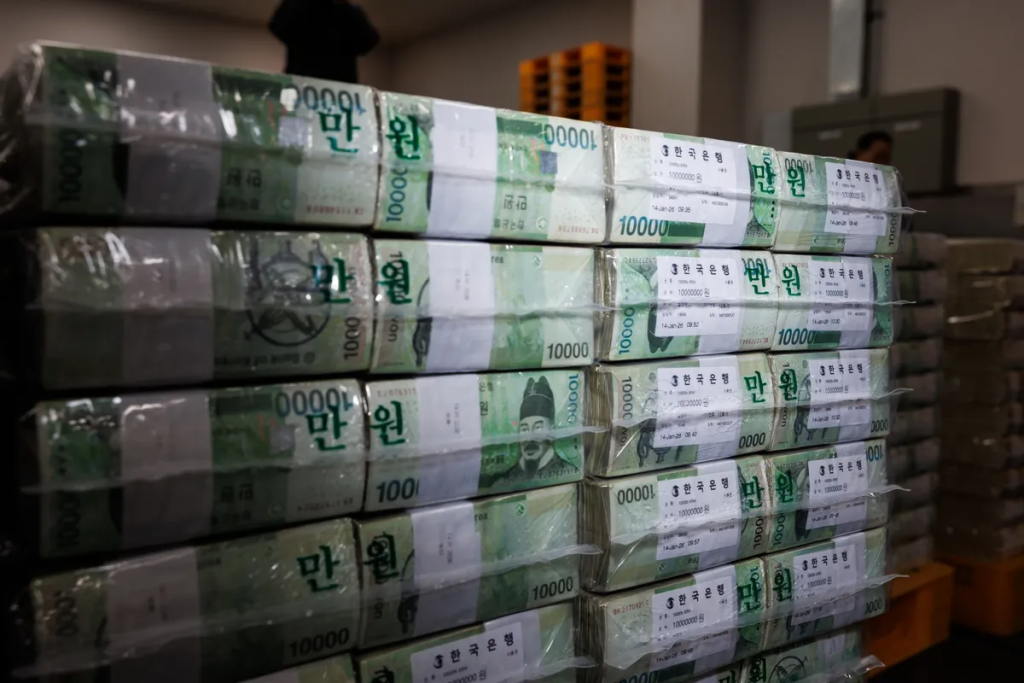
Currency volatility across emerging markets has climbed sharply this week, overtaking fluctuations seen in developed economies for the first time in months. The shift marks the end of an unusually long period during which emerging-market currencies remained calmer than those of major advanced economies. Analysts say the sudden increase in volatility reflects rising geopolitical tensions, shifting global capital flows, and heightened uncertainty in energy markets. As investors reassess risk exposure, emerging-market currencies have begun to move more sharply against the US dollar and other major currencies.
Market indicators tracking currency volatility show that fluctuations in emerging-market foreign exchange markets have now exceeded those in developed economies. This reversal follows more than 200 consecutive days during which emerging-market currencies recorded lower volatility compared with those of the world’s largest economies. Such a prolonged period of stability was historically rare and reflected strong capital inflows, stable commodity markets, and relatively predictable global financial conditions. However, the recent escalation of geopolitical tensions and commodity price swings has abruptly changed the landscape.
A key factor behind the renewed volatility is the surge in global energy prices. Oil markets have reacted strongly to rising tensions in the Middle East, pushing crude prices to their highest levels in several months. Since many emerging economies are heavily dependent on energy imports, higher oil prices can weaken their currencies by increasing trade deficits and raising inflationary pressures. As energy costs climb, investors often shift toward safer assets, which tends to put additional pressure on emerging-market currencies.
Equity market movements have also contributed to the sudden increase in currency swings. Several Asian markets have experienced sharp declines amid concerns about geopolitical risks and economic uncertainty. Large movements in stock markets often trigger shifts in foreign capital flows, which can quickly influence currency markets. When investors withdraw funds from emerging economies during periods of uncertainty, local currencies tend to depreciate more rapidly.
Another important factor influencing foreign exchange markets is the strengthening of the US dollar. During periods of global uncertainty, the dollar typically benefits from its status as the world’s primary reserve currency and a perceived safe-haven asset. When demand for dollars increases, emerging-market currencies often weaken as capital flows move toward US assets such as Treasury bonds and other low-risk investments.
Despite the recent surge in volatility, some analysts believe the movement may represent a temporary adjustment rather than a prolonged trend. Currency markets had experienced an extended period of calm before the latest geopolitical developments and commodity price spikes disrupted the balance. If global tensions ease and commodity prices stabilize, volatility in emerging-market currencies could moderate again. However, investors remain cautious as geopolitical risks, energy market disruptions, and shifting monetary policy expectations continue to influence global financial markets.