
Budget
Commerce Ministry Seeks Tariff Proposals From Business Chambers for Budget 2026-27

Published
2 days agoon

Pakistan’s Ministry of Commerce has invited chambers of commerce and industry associations across the country to submit proposals related to customs duties and tariff structures for the upcoming federal budget 2026-27. The ministry has asked stakeholders to present their recommendations by March 10, emphasizing the importance of data driven proposals that align with the government’s broader trade policy objectives. Officials said the consultation process aims to gather input from business groups and industry representatives before finalizing tariff adjustments for the next fiscal year. The ministry believes that incorporating feedback from trade bodies will help design a tariff framework that supports industrial development, improves competitiveness and strengthens the country’s export potential while maintaining balanced trade policies.
According to officials the ministry had earlier contacted major business chambers and trade associations through formal letters issued in December 2025 and January 2026 requesting their input on tariff reforms. These communications encouraged stakeholders to analyze the current customs duty framework and submit proposals for possible revisions in line with economic priorities. The ministry said the responses will assist policymakers in evaluating the effectiveness of existing tariff measures and identifying areas where adjustments may be required to support domestic industries and facilitate trade. Authorities expect business groups to provide detailed recommendations that reflect practical industry needs and economic realities.
To ensure consistency and efficiency in the review process the ministry has issued specific guidelines for submitting tariff proposals. Stakeholders have been instructed to use prescribed templates prepared by the Tariff Policy Centre and the Tariff Policy Wing. These templates must be completed in Microsoft Excel format so that officials can systematically review and compare submissions from different sectors. The ministry cautioned chambers and industry associations against submitting proposals in alternative formats as such submissions may not be accepted for evaluation. Officials said the structured format will allow policymakers to assess tariff recommendations more effectively and ensure that all proposals are reviewed under a standardized framework.
The ministry has also urged stakeholders to carefully examine current customs duty rates before preparing their proposals. Businesses are encouraged to provide detailed statistical evidence and market data to support any request for tariff adjustments. Officials said proposals lacking adequate data or failing to meet procedural requirements may be rejected during the review stage. The government believes that evidence based policy suggestions will help ensure that tariff reforms are transparent and aligned with economic goals. Authorities also emphasized that recommendations should reflect the broader principles outlined in the National Tariff Policy 2025 30 which aims to promote export growth and industrial efficiency while gradually rationalizing tariff structures.
Industry groups are expected to present proposals addressing both protective duties for locally manufactured products and possible concessions for raw materials used in domestic production. The ministry said detailed information must be provided when requesting higher tariffs on finished goods or reduced duties on imported inputs. Officials believe that such proposals will help policymakers strike a balance between protecting local industries and ensuring that manufacturers have access to affordable raw materials required for production. The consultation process forms part of the government’s broader efforts to develop a more competitive and transparent tariff regime ahead of the upcoming federal budget.
You may like
Budget
UK Budget Faces Risks From Potential Stock Market Correction
Published
2 days agoon
March 4, 2026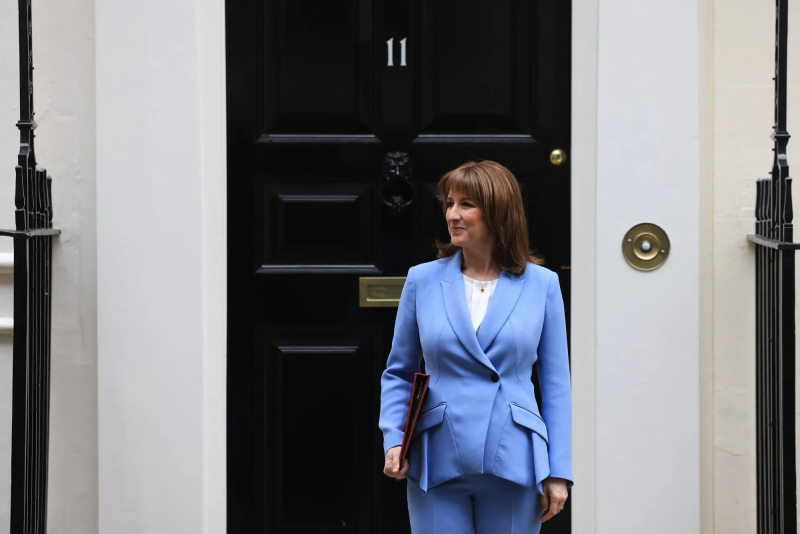
The United Kingdom’s public finances could face increased vulnerability if global stock markets experience a sharp correction, according to the country’s independent fiscal watchdog. The Office for Budget Responsibility has warned that a large portion of the projected improvement in government revenues over the coming years is closely linked to recent gains in equity markets. These gains have helped strengthen tax receipts connected to financial assets, corporate profits and investment income. However officials say the reliance on market performance creates uncertainty for long term fiscal projections, especially during periods of geopolitical tension and economic volatility. The warning comes as global financial markets reacted strongly to the outbreak of conflict in the Middle East, which has triggered significant fluctuations in stock prices and investor sentiment across international markets.
The Office for Budget Responsibility noted that a substantial share of the expected increase in government revenues by the 2030 to 2031 fiscal year is associated with the recent rally in equity markets. Rising share prices have boosted tax income through several channels including capital gains taxes, corporate tax receipts and income generated from investment portfolios. Analysts estimate that nearly three quarters of the projected improvement in government receipts can be traced back to strong equity market performance. While these gains have provided additional fiscal space for the government, the watchdog cautioned that such revenues can be unpredictable because financial markets often fluctuate in response to global economic conditions.
Recent geopolitical developments have already demonstrated how quickly market conditions can change. The escalation of tensions in the Middle East has triggered volatility across international stock exchanges as investors react to uncertainty surrounding energy prices, supply chains and global economic growth. When markets experience sharp declines government revenues tied to investment activity may also fall, potentially affecting fiscal planning and budget projections. Economists say governments that rely heavily on market driven tax revenues must account for this volatility when designing long term fiscal strategies. Sudden corrections in financial markets can reduce capital gains taxes and investment related revenues, placing additional pressure on public finances.
The UK government has been working to stabilize public finances while supporting economic growth following several years of economic challenges. Fiscal authorities aim to balance spending priorities with responsible debt management while maintaining investor confidence in the country’s financial system. However economists note that external shocks such as geopolitical conflicts or global economic slowdowns can influence market conditions and affect government revenue forecasts. As a result policymakers often incorporate a margin of flexibility in fiscal planning to respond to unexpected financial developments.
Financial analysts say the latest warning highlights the broader connection between financial markets and government budgets in advanced economies. Strong equity markets can temporarily boost public revenues and improve fiscal projections, but these gains may not always be sustainable if market sentiment shifts. The Office for Budget Responsibility has emphasized the importance of maintaining cautious fiscal assumptions and monitoring global economic developments that could influence financial markets and public finances. With geopolitical tensions continuing to influence investor behavior, policymakers are expected to closely track market trends while evaluating potential risks to the government’s long term fiscal outlook.
Budget
NA Suspends Rules for Iran Debate, Passes Crypto Bill Instead
Published
2 days agoon
March 4, 2026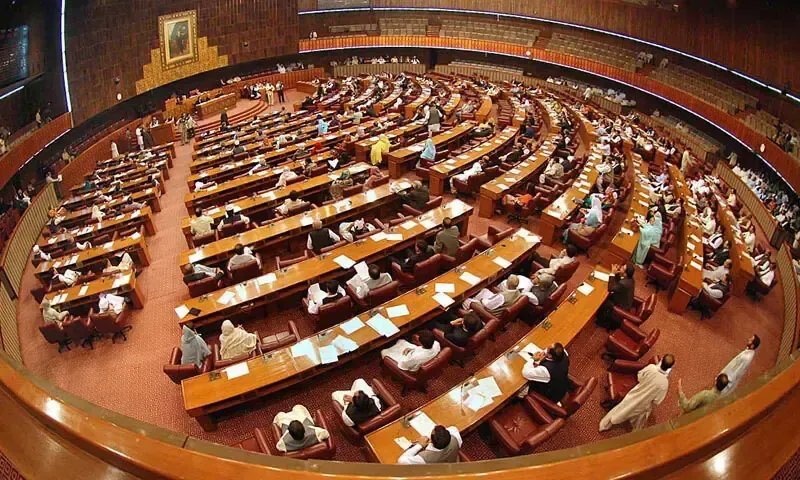
Pakistan’s National Assembly temporarily suspended its usual procedural rules on Tuesday, allowing lawmakers to swiftly pass a bill aimed at regulating cryptocurrency assets before opening a debate on the evolving crisis in the Middle East. The legislation was approved within minutes after the government used parliamentary provisions to alter the day’s agenda. Officials said the move was intended to fast-track the establishment of a regulatory framework for digital assets in Pakistan. The bill clears the path for creating a supervisory authority responsible for overseeing cryptocurrency activities, exchanges, and related digital financial instruments. Supporters of the legislation argue that formal regulation is necessary as global financial systems increasingly integrate blockchain-based assets into mainstream markets.
The session initially began with a proposal from Minister for Parliamentary Affairs Dr. Tariq Fazal Chaudhry, who requested the suspension of the scheduled private members’ business so the Assembly could address the security situation following recent military developments involving the United States, Israel, and Iran. However, before lawmakers began their discussion on geopolitical tensions, the government moved quickly to present the cryptocurrency legislation for approval. Parliamentary observers noted that the bill passed rapidly with limited debate, highlighting the government’s urgency to introduce a legal structure for digital asset oversight. The swift approval reflects growing recognition among policymakers that digital currencies and blockchain technologies are becoming increasingly relevant to Pakistan’s financial landscape.
The proposed regulatory framework aims to establish a dedicated authority responsible for supervising cryptocurrency transactions, monitoring compliance, and ensuring investor protection. Lawmakers supporting the measure argued that unregulated digital asset trading carries risks including fraud, market manipulation, and financial instability. By creating a formal oversight body, the government hopes to promote transparency while also enabling innovation in financial technology. Several policymakers emphasized that global markets are moving toward regulated crypto environments and Pakistan must adapt to remain competitive. A regulated system could also provide the government with better monitoring tools to prevent illicit financial flows and strengthen overall financial governance.
During the subsequent debate on regional tensions, members of the National Assembly strongly condemned the reported killing of Iranian Supreme Leader Ayatollah Ali Khamenei. Several lawmakers expressed concern that escalating hostilities in the Middle East could have far-reaching implications for regional security. Some parliamentarians warned that growing geopolitical tensions could eventually draw neighboring countries into broader instability. In their remarks, lawmakers emphasized the importance of maintaining diplomatic engagement and regional cooperation to prevent further escalation. The debate reflected deep concern among Pakistani legislators regarding the potential impact of international conflicts on the country’s economic and security environment.
Despite the intense discussion on geopolitical developments, the approval of the cryptocurrency bill remained a key outcome of the session. Analysts believe the legislation signals a shift in Pakistan’s approach toward digital finance and emerging technologies. If implemented effectively, the new regulatory authority could play a significant role in shaping the country’s digital asset ecosystem. Experts say a clear regulatory framework may encourage responsible innovation while protecting investors and maintaining financial stability. As cryptocurrency adoption continues to grow worldwide, Pakistan’s policymakers appear to be positioning the country to participate more actively in the evolving global digital economy.
Tags:


Pakistan and Germany explore new business cooperation during Karachi meeting

SECP approves LSE Capital voluntary de registration from modaraba business

Chinese investment group explores $5 billion to $10 billion projects in Pakistan
Trending

 Fashion9 years ago
These ’90s fashion trends are making a comeback in 2017
- Entertainment9 years ago
The final 6 ‘Game of Thrones’ episodes might feel like a full season
- Fashion9 years ago
According to Dior Couture, this taboo fashion accessory is back
- Entertainment9 years ago
The old and New Edition cast comes together to perform
- Sports9 years ago
Phillies’ Aaron Altherr makes mind-boggling barehanded play
- Business9 years ago
Uber and Lyft are finally available in all of New York State
- Entertainment9 years ago
Disney’s live-action Aladdin finally finds its stars
- Sports9 years ago
Steph Curry finally got the contract he deserves from the Warriors