
Global Markets
Apollo’s Marc Rowan on Geopolitics and Global Markets

Published
2 days agoon

Marc Rowan, the chief executive of Apollo Global Management, recently shared his views on how geopolitical developments are influencing global financial markets. According to Rowan, political tensions and shifting alliances around the world are becoming increasingly important factors shaping investor sentiment and market direction. As global conflicts and economic competition intensify, investors must adapt to an environment where geopolitical risks play a greater role in financial decision-making.
Rowan emphasized that markets today are reacting more quickly to geopolitical developments than in the past. Events such as regional conflicts, trade disputes, and energy supply concerns can rapidly affect asset prices across global markets. Investors are now paying close attention not only to economic indicators but also to political developments that could influence trade routes, energy flows, and global supply chains.
He noted that geopolitical uncertainty often increases volatility in financial markets. When investors face uncertainty, they tend to move capital toward safer assets such as government bonds, gold, or the US dollar. This shift can create sudden changes in currency markets, equities, and commodities. Rowan explained that global investors must consider both economic fundamentals and geopolitical risks when building investment strategies.
In an environment where geopolitical developments can quickly influence markets, accurate and well-structured financial reporting becomes increasingly important. Investors rely on credible information and expert analysis to understand how political events translate into financial market movements. Content that clearly explains the relationship between geopolitics and market trends helps readers make informed investment decisions and aligns with search engines’ emphasis on trustworthy financial information.
Rowan also highlighted that long-term investors should avoid reacting emotionally to short-term geopolitical events. Instead, they should focus on broader economic trends and structural shifts in the global economy. Diversification across asset classes and regions remains one of the most effective strategies for managing geopolitical risk.
Looking ahead, Rowan believes that geopolitical dynamics will continue to shape global financial markets in the coming years. As countries compete for economic influence and energy security, market volatility may increase periodically. However, he noted that these shifts also create opportunities for investors who understand how geopolitical developments influence capital flows and global economic trends.
You may like

Global Markets on Edge as Gulf War Threatens Energy and Supply Chains

Global Markets Pause as Investors Assess Middle East Conflict

Emerging Currencies Fall as Iran Conflict Escalates

PSX Rebounds as KSE-100 Surges Over 5,000 Points After Historic Drop

PSX Plunges 1,350 Points on Geopolitical Tensions


Emerging Market Currencies Stabilize as Oil Prices Steady on Iran Developments
Global Markets
RBI Sells Dollars to Support Rupee After Currency Hits Record Low
Published
20 hours agoon
March 5, 2026
India’s central bank reportedly stepped into the foreign exchange market to stabilize the national currency after the Indian rupee weakened to a record low against the US dollar. Market participants indicated that the Reserve Bank of India (RBI) likely intervened by selling large amounts of US dollars through state-run banks in order to support the rupee. The intervention appeared to take place shortly before the local spot currency market opened on Thursday morning. Traders observed a sharp movement in the currency during early trading activity, suggesting that the central bank had taken steps to prevent further depreciation of the rupee and restore stability in the foreign exchange market.
According to market participants, the rupee was expected to open near the 92.10 level against the US dollar. However, minutes before official trading began at 9:00 a.m. local time, the currency experienced a sudden rally. The rupee strengthened quickly to around 91.40 per dollar on the interbank trading system, indicating significant dollar selling activity in the market. Traders reported that at least three state-run banks were actively selling dollars during the period, a move commonly interpreted as intervention carried out on behalf of the central bank. Such operations are often used by monetary authorities to control excessive volatility in currency markets.
Currency intervention is a tool frequently used by central banks to maintain orderly market conditions and prevent abrupt fluctuations in exchange rates. In India’s case, the recent weakness of the rupee has been driven by multiple external pressures, including rising global oil prices, geopolitical tensions, and shifting capital flows in emerging markets. As one of the world’s largest energy importers, India is particularly sensitive to higher oil prices, which increase the country’s import bill and place downward pressure on the domestic currency. By selling dollars in the market, the RBI can temporarily boost demand for the rupee and help stabilize its value.
Financial analysts say central bank intervention can also play an important psychological role in markets. When traders believe that authorities are willing to act to support the currency, speculative pressure often declines. This can help prevent panic selling and restore confidence among investors and businesses that rely on stable exchange rates. In emerging economies, currency stability is especially important because large fluctuations can increase inflation and disrupt trade and investment flows. The RBI has historically intervened in foreign exchange markets during periods of sharp volatility to ensure that currency movements remain manageable.
Despite the intervention, analysts believe the outlook for the rupee will continue to depend on global economic developments and capital flows. Rising energy prices, geopolitical tensions, and international interest rate trends remain key factors affecting emerging market currencies. Investors will also be closely watching future policy signals from the Reserve Bank of India as it balances inflation control, economic growth, and currency stability. While short-term interventions can support the currency, long-term stability will largely depend on broader economic fundamentals and the global financial environment.
Global Markets
Global Markets on Edge as Gulf War Threatens Energy and Supply Chains
Published
21 hours agoon
March 5, 2026
Global financial markets remain tense as the ongoing conflict in the Gulf region continues to raise concerns about disruptions to key global supply chains. The escalation of hostilities has already begun affecting energy markets and industrial commodities, increasing uncertainty across international financial systems. Investors are closely monitoring developments in the Middle East because the region plays a crucial role in supplying oil, natural gas, and various raw materials to global markets. Rising geopolitical tensions have triggered volatility in currencies, commodities, and equity markets as traders attempt to assess the potential economic consequences of prolonged instability in one of the world’s most important energy-producing regions.
One of the most immediate concerns for global markets is the potential disruption to energy supplies and related industries. Oil and gas shipments passing through critical trade routes in the Middle East are particularly vulnerable during periods of conflict. Any interruption to these supply routes could have a significant impact on global fuel prices and industrial production. Reports indicate that the ongoing conflict is already beginning to affect shipments of fertilizers, chemicals, and aluminum in addition to energy products. These materials are essential components in global manufacturing and agriculture, meaning prolonged disruptions could trigger broader economic consequences including higher production costs and supply shortages in several industries.
The effects of the conflict are also being felt across currency markets, where the US dollar has strengthened against several major currencies as investors seek safe-haven assets. Currency pairs across the G10 group have experienced fluctuations as traders react to rising geopolitical risks and higher energy prices. Analysts note that increased energy costs are contributing to inflationary pressure in many economies, pushing government bond yields higher as investors adjust expectations for future interest rates. Despite the rising tension, some market participants still believe the conflict may be temporary, which has limited the scale of movements in certain financial assets.
Major global currencies have shown mixed performance during the period of uncertainty. The euro has remained under pressure against the US dollar, with traders showing limited conviction about its near-term direction. The Japanese yen has experienced moderate fluctuations as intervention concerns and interest rate expectations influence trading patterns. The British pound has traded within a relatively narrow range, reflecting cautious investor sentiment as markets wait for clearer signals from global economic conditions. Meanwhile, commodity-linked currencies such as the Canadian dollar and Australian dollar have also faced volatility as energy price movements and geopolitical developments continue to influence market dynamics.
Emerging market currencies have also reacted to the evolving geopolitical situation. Countries that rely heavily on imported energy, including India, remain particularly sensitive to disruptions in global oil and gas markets. Reports indicate that the Indian central bank has intervened in currency markets to stabilize the rupee following recent volatility. Meanwhile, other emerging market currencies have experienced mixed movements as investors shift capital between markets in response to global risk sentiment. Analysts believe that the direction of global markets in the coming weeks will largely depend on how the geopolitical situation develops and whether energy supply disruptions intensify or begin to ease.
Global Markets
Global Markets Pause as Investors Assess Middle East Conflict
Published
22 hours agoon
March 5, 2026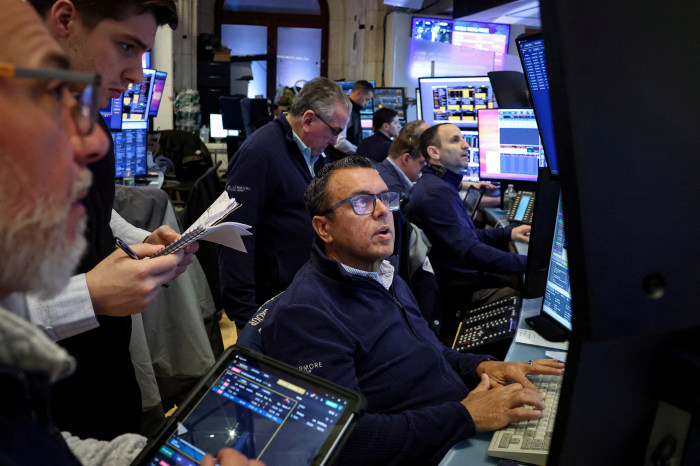
Global financial markets showed signs of stabilization as investors paused to assess the evolving geopolitical situation in the Middle East. Equity markets across Asia, the United States, and Europe recorded modest gains after days of volatility triggered by escalating tensions in the region. Investors appeared cautiously optimistic that diplomatic channels might eventually reduce the intensity of the conflict. Asian markets led the rebound, with South Korea’s KOSPI recovering sharply and Japan’s Nikkei also posting solid gains. The improvement in market sentiment suggested that investors were temporarily shifting away from panic-driven selling and returning to equities after recent losses, although uncertainty continues to dominate the global economic outlook.
The positive tone in equity markets was also reflected in the United States, where major stock indices moved higher during the previous trading session. Technology stocks helped lead the recovery as the Nasdaq index recorded notable gains, while the S&P 500 also advanced. The rebound was supported by stronger-than-expected economic data and signs of resilience in the US economy. Investors reacted positively to recent reports indicating growth in private payrolls during February and a significant rise in the services sector index. These indicators suggested that economic activity remains relatively stable despite ongoing geopolitical risks and global market volatility.
However, geopolitical uncertainty continues to influence investor sentiment. The ongoing conflict in the Middle East has raised concerns about potential disruptions to global energy supplies, particularly through the Strait of Hormuz, one of the world’s most critical oil shipping routes. Any prolonged disruption in this corridor could significantly affect global oil markets and international trade. While there have been early signs of possible diplomatic communication between opposing sides, analysts caution that the situation remains fragile. Military activity in the region has entered another week, and many observers believe tensions could persist for an extended period.
Energy markets have already reacted to the geopolitical developments, with crude oil prices rising as traders anticipate potential supply disruptions. Both US and Brent crude benchmarks recorded gains, with Brent prices moving above the $83 per barrel level during trading. Higher oil prices have also increased inflation concerns across several economies that rely heavily on imported energy. Meanwhile, gold prices edged higher as investors sought safe-haven assets amid continued geopolitical uncertainty. The US dollar also strengthened after briefly retreating from recent highs, reflecting renewed demand for defensive assets.
Despite the recent rebound in equities, financial markets remain cautious as investors await further economic data and geopolitical developments. Market participants are closely monitoring upcoming US economic reports, including weekly jobless claims and the latest labor market data. These indicators could provide additional insights into the strength of the US economy and influence expectations about future monetary policy decisions. While global markets have temporarily stabilized, analysts believe volatility could return quickly if geopolitical tensions intensify or energy supply disruptions worsen. Investors are therefore maintaining a cautious approach while assessing how global economic and political developments may shape market trends in the coming weeks.


Pakistan and Germany explore new business cooperation during Karachi meeting

SECP approves LSE Capital voluntary de registration from modaraba business

Chinese investment group explores $5 billion to $10 billion projects in Pakistan
Trending

 Fashion9 years ago
These ’90s fashion trends are making a comeback in 2017
- Entertainment9 years ago
The final 6 ‘Game of Thrones’ episodes might feel like a full season
- Fashion9 years ago
According to Dior Couture, this taboo fashion accessory is back
- Entertainment9 years ago
The old and New Edition cast comes together to perform
- Sports9 years ago
Phillies’ Aaron Altherr makes mind-boggling barehanded play
- Business9 years ago
Uber and Lyft are finally available in all of New York State
- Entertainment9 years ago
Disney’s live-action Aladdin finally finds its stars
- Sports9 years ago
Steph Curry finally got the contract he deserves from the Warriors